What Sets Veneers in Oxnard CA Apart from Bonding?
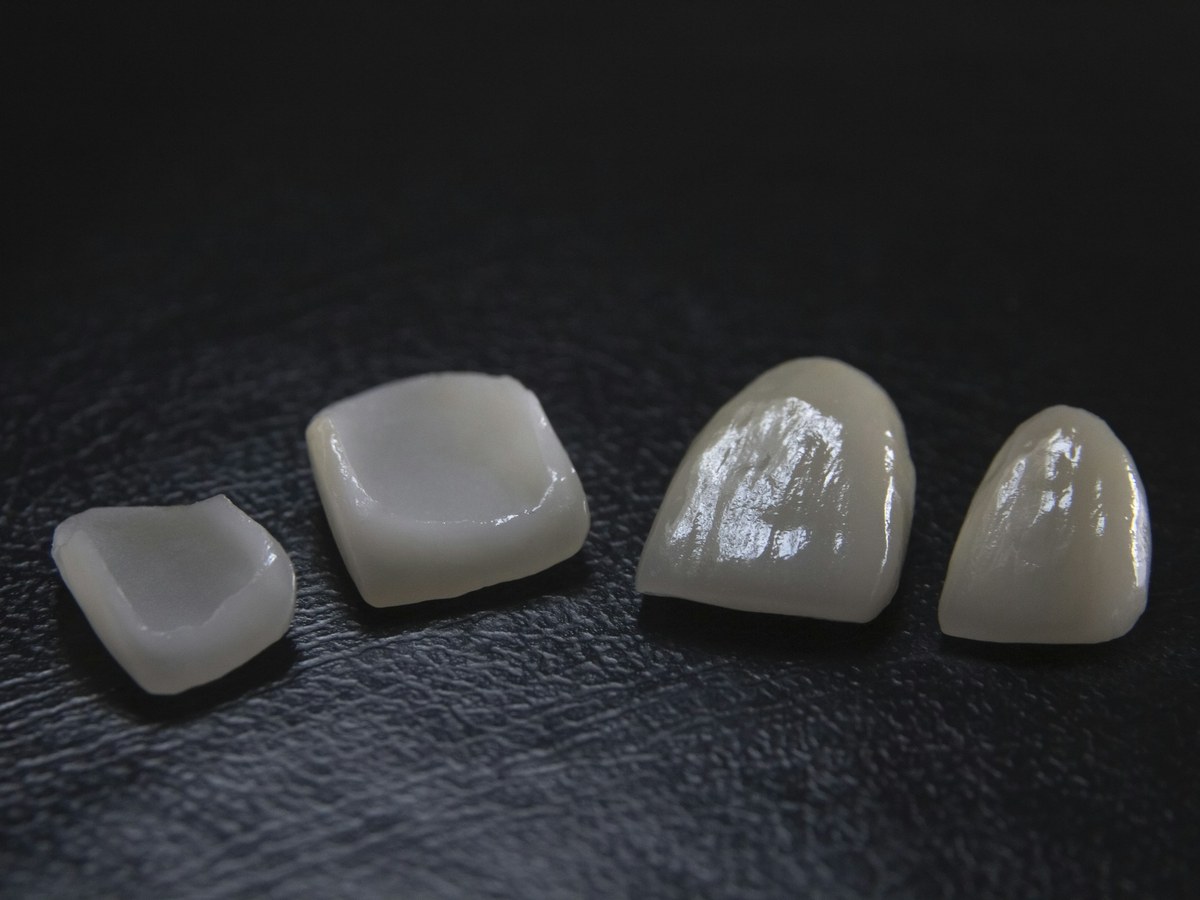
People often walk into a cosmetic dental consultation using the words veneers and bonding as if they mean the same thing. I understand why. Both can improve a smile, both can fix chips or uneven edges, and both can make teeth look brighter or more balanced. But from a clinical and practical standpoint, they are very different treatments.
That difference matters more than most patients realize.
If you are comparing options for Veneers Oxnard CA, the real question is not which treatment is “better” in the abstract. It is which one fits your teeth, your bite, your budget, and your expectations over the next several years. A person who wants a tiny chip repaired before a wedding usually needs something very different from a person who has worn enamel, deep discoloration, old dental work, or years of frustration with the shape of their front teeth.
The most useful way to think about veneers versus bonding is this: bonding is usually a direct, conservative sculpting treatment done chairside, while veneers are a more comprehensive restorative and cosmetic approach that is custom-designed and fabricated to cover the front surface of the tooth. That simple distinction affects longevity, appearance, stain resistance, cost, maintenance, and how precisely the final smile can be designed.
The core difference comes down to material and method
Bonding uses tooth-colored composite resin. The dentist applies the material directly to the tooth, shapes it by hand, and hardens it with a curing light. When done well, bonding can look very natural. It is one of the most useful tools in cosmetic dentistry because it is efficient, versatile, and often quite conservative.
Veneers, by contrast, are typically thin shells made of porcelain or ceramic, though some may be fabricated from other high-quality materials. They are designed outside the mouth after careful planning and then bonded to the tooth. Because of how they are made, veneers offer a higher level of control over shape, translucency, surface texture, and color stability.
That difference in fabrication is not a technical footnote. It is the reason veneers can produce changes that bonding sometimes cannot sustain or refine to the same degree.
A front tooth with one tiny corner chipped off may be an ideal bonding case. A smile with multiple mismatched front teeth, stubborn staining, uneven lengths, and old filling material usually falls more naturally into veneer territory.
Why veneers often deliver a more polished cosmetic result
Composite bonding depends heavily on the dentist’s hand skills in real time. Some dentists are outstanding at it. In experienced hands, direct bonding can be beautifully artistic. Still, composite resin has limitations. It can lose some luster over time, pick up stains more readily than porcelain, and wear down at edges, especially in patients who clench, grind, bite nails, or use their front teeth hard.
Porcelain veneers have an advantage in optics. Good ceramic mimics enamel in a way that is difficult for direct resin to match over the long run. Light reflects differently off porcelain. The surface stays glossy. Fine contouring can be more exact because the restoration is designed with lab support, often after photographs, measurements, and sometimes a wax-up or mock-up.
This is where many patients notice the biggest separation between the two options. Bonding can absolutely improve a smile. Veneers can often create a cleaner, more consistent, more durable transformation, especially across several front teeth.
That does not mean veneers should be the default answer. It means their strengths show up most clearly when the cosmetic goals are larger and more demanding.
The issue of stain resistance is more important than people think
Patients often focus on color at delivery, when the teeth first look bright and fresh. Far fewer think about how that result will age after coffee, tea, red wine, berries, curry, tobacco, and years of normal use.
Composite resin is more porous than porcelain. Over time, that matters. Bonded areas can pick up discoloration, especially at margins or on surfaces that receive a lot of exposure. They may also lose some of their original polish. A bonded tooth that looked excellent on day one may still look good three years later, but not always as crisp as porcelain.
Porcelain veneers generally hold color better. They resist staining more effectively and maintain a smooth, glossy surface for longer. For patients who care deeply about brightness and consistency, especially in the visible smile zone, that can be a deciding factor.
I have seen this play out in a very predictable pattern. A patient chooses bonding because it is simpler and less expensive up front. The early result is pleasing. Then after a few years, the person notices that one bonded edge has dulled, a repaired corner looks slightly different from the neighboring enamel, or the polished surface no longer matches the untouched teeth under certain lighting. The restoration may still be clinically acceptable, yet aesthetically it no longer satisfies the patient. That is often the point when veneers re-enter the conversation.
Longevity is rarely just about years
People often ask, “How long do veneers last?” or “How long does bonding last?” Those are fair questions, but the honest answer depends on habits, bite forces, oral hygiene, diet, and the quality of planning and execution.
Bonding can last several years and sometimes longer with careful use and maintenance. Small cosmetic bonding repairs can be refreshed or touched up, which is one of their advantages. If a bonded edge chips, the dentist can often repair it without replacing everything.
Veneers tend to have a longer functional and cosmetic lifespan, especially porcelain veneers placed with good case selection and proper bite management. They are not permanent in the sense of lasting forever, but they are often the more stable long-term option for patients seeking durable smile enhancement.
What matters in practice is not just whether the restoration stays attached. It is whether it still looks good, feels right, and fits the patient’s expectations after years of daily life. A restoration can technically still be “there” while no longer satisfying the patient aesthetically. That distinction matters a great deal in cosmetic dentistry.
Tooth preparation is one of the biggest trade-offs
This is where the conversation gets more nuanced.
Bonding usually requires little to no removal of natural tooth structure, depending on the case. That conservative nature is a real benefit. If a young patient has a small gap, minor wear, or a chipped edge, bonding can preserve enamel while still improving appearance. For many people, that is the right first step.
Veneers may require some enamel reduction, though the amount varies. In some selective cases, minimal-prep or no-prep approaches are possible, but they are not suitable for everyone. If a tooth is already protrusive, bulky, or heavily restored, some preparation may be necessary to create a natural-looking result that does not appear too thick.
This is one reason a thoughtful dentist does not recommend veneers casually. Once enamel is reduced, the treatment path changes. That is not automatically a bad thing, but it is a decision that deserves care. Patients should understand the biological cost as well as the cosmetic benefit.
A good consultation should include a candid discussion of what is being preserved, what is being modified, and why.
Veneers are often better for complex smile design problems
Some smile concerns are simple. Others stack on top of one another.
A patient may have short lateral incisors, slight rotation of a canine, uneven central incisors, fluorosis or internal staining, and old bonding that no longer matches. In cases like that, trying to solve every issue with direct bonding can become a compromise. The color may be harder to control. The contours may be limited by the existing tooth position. The final result may be better, but not fully harmonious.
Veneers allow a more complete redesign. Length can be adjusted with greater predictability. Shapes can be unified. Color can be balanced across multiple teeth. Surface anatomy can be made more consistent. This is especially important in the social and professional situations where people become highly aware of their smile, not because anyone else is measuring every detail, but because asymmetry and inconsistency can draw the eye.
Patients seeking Veneers Oxnard CA are often not just asking for whiter teeth. They are asking for proportion, symmetry, refinement, and a smile that looks like it belongs naturally to their face.
That level of design precision is one of the clearest points of separation from bonding.
Bonding still shines in the right cases
It would be a mistake to frame bonding as a lesser treatment. It is not. It is simply different, and in many cases, exactly the smarter choice.
Here are some situations where bonding often makes more sense:
- a small chip on a front tooth
- a minor gap between teeth
- subtle reshaping of edges
- a cosmetic trial before committing to larger treatment
- younger patients where preserving enamel is a priority
In these situations, bonding can be elegant, conservative, and cost-effective. It can also serve as a diagnostic stepping stone. Sometimes a patient is unsure about changing tooth length or contour. Bonding can preview those changes in a reversible or minimally invasive way before a more definitive veneer plan is considered.
That kind of restraint is good dentistry. Not every aesthetic concern needs porcelain.
The financial side deserves an honest discussion
Cost is often the quiet driver behind this decision, even when patients feel hesitant to say so directly.
Bonding generally costs less per tooth than veneers. That lower initial cost makes it attractive, especially when the cosmetic issue is modest or localized. If only one tooth needs a minor enhancement, bonding may provide excellent value.
Veneers typically cost more because the process is more involved. Diagnosis, planning, tooth preparation, impressions or scans, temporaries in some cases, laboratory fabrication, and final bonding all add complexity. The material itself is also more sophisticated.
But a lower starting cost does not always mean lower long-term cost. If bonding requires regular maintenance, polishing, repair, or replacement to keep it looking its best, the savings can narrow over time. On the other hand, if the cosmetic issue is small and stable, veneers may be more treatment than the patient actually needs.
The smartest financial choice is the one that aligns treatment intensity with the actual problem.
Bite forces and habits can change the answer quickly
Cosmetic treatment does not happen in a vacuum. The bite matters. Night grinding matters. Edge-to-edge contact matters. So do habits like chewing ice, opening packages with teeth, or using front teeth as tools, which many patients admit only after something breaks.
A person with a heavy bite or bruxism can chip bonding repeatedly. Veneers can also fail under the wrong forces, but case planning tends to account for these risks more deliberately because veneers represent a more significant investment. Often that includes evaluating wear patterns, discussing a night guard, and checking whether the planned tooth shape will be protected in function.
This is one of the places where real-world dentistry departs from glossy before-and-after photos. A smile can look ideal in still images, yet struggle in the mouth if the bite is unstable. The best cosmetic result is one the patient can live with comfortably, not just one that photographs well.
Repairability favors bonding, but refinement often favors veneers
One of bonding’s strongest advantages is ease of repair. If a small area chips or wears, it can often be patched directly. That makes bonding practical for people who want flexibility or expect occasional maintenance.
Veneers are less forgiving in that sense. If a porcelain veneer fractures significantly or debonds under certain circumstances, the repair pathway may be more involved. Depending on the damage, replacement may be the better option. That is part of the trade-off for having a more stable, stain-resistant, high-finish material in the first place.
Patients sometimes hear “repairable” and assume that means “better.” Not always. A restoration that needs periodic repair may still be the right option in some cases, but for patients who want a more settled result with less routine aesthetic upkeep, veneers often fit better.
The consultation process is where the right answer usually becomes clear
An experienced cosmetic dentist can often tell within minutes whether a concern leans toward bonding or veneers, but a careful recommendation should come after looking at more than just the front surface of the teeth.
Color mismatch, enamel quality, existing fillings, tooth alignment, gum symmetry, smile line, lip movement, and bite all shape the decision. Sometimes the best answer is not one or the other. A mixed approach can be ideal. For example, veneers on the most visible teeth and bonding on a less critical tooth, or bonding as an interim step before a later veneer plan.
Patients looking into Veneers Oxnard CA should expect more than a quick sales conversation. A proper consultation should include photographs or scans, a review of goals, a discussion of how much tooth change is necessary, and a realistic explanation of maintenance. If the dentist talks only about making teeth white, that is not enough. Shade is only one part of smile design.
The better conversations usually sound more grounded. How do your teeth come together? Which tooth bothers you most? Are you trying to repair one problem or redesign the smile? Do you want the most conservative option, or the one most likely to hold its appearance over time?
Those questions separate tailored care from one-size-fits-all dentistry.
Cosmetic dentistry is not just about prettier teeth
Patients often come in saying they hate one chipped edge or one dark tooth, and during the conversation it becomes obvious that what bothers them is not purely cosmetic. They smile less in photos. They cover their mouth while laughing. They have had a front tooth repaired three times and no longer trust the result. Or they feel that their teeth make them look older than they are because the edges appear worn flat.
That emotional layer is real, and it should be handled carefully. Veneers can be transformative for Veneers Oxnard CA the right patient because they address several concerns at once. Bonding can be deeply satisfying for a patient who simply wants one defect corrected without entering a bigger treatment cycle.
The point is not that one treatment is more sophisticated than the other. The point is that the right treatment respects both the biology of the teeth and the psychology of the patient.
A practical way to decide
For patients deciding between the two, a simple framework often helps:
- choose bonding when the change is small, the enamel is healthy, and conservation matters most
- choose veneers when multiple front teeth need coordinated changes in color, shape, size, or surface quality
- lean toward veneers when long-term polish and stain resistance are priorities
- lean toward bonding when repairability and lower initial cost matter more
- ask your dentist to evaluate bite forces before choosing either option
None of those points should replace an examination, but they do reflect the patterns seen every day in cosmetic practice.
What really sets veneers apart in Oxnard
The local part of this conversation matters less than patients sometimes expect, but there are still practical distinctions in a place like Oxnard. People here live active lives. They spend time outdoors, socialize frequently, and often want cosmetic results that hold up under bright natural light. That matters because natural light is unforgiving. It reveals mismatched textures, flat-looking composite, and surface staining more readily than dim indoor lighting.
For that reason, many patients exploring Veneers Oxnard CA are not simply chasing a brighter smile. They are looking for a result that looks clean and believable in daylight, in conversation, in photographs, and over time. Veneers tend to excel in that environment because of their surface quality and optical depth.
At the same time, Oxnard patients are just as practical as anyone else. Many do not need a full veneer case, and an ethical cosmetic dentist should say so. If one tooth has a chip and the rest of the smile is strong, bonding may be the more sensible treatment, even if veneers are available.
That balance is what sets good cosmetic care apart, not the material alone. Veneers stand out because they offer a higher ceiling for precision, longevity, and aesthetic refinement. Bonding stands out because it can solve the right problem beautifully with less intervention.
The best result comes from knowing which problem you are actually trying to solve.
Oxnard Dentistry
1730 E Gonzales Rd, Oxnard, CA 93036, United States
+1 805-307-8731
FAQ About Veneers Oxnard CA
How long do porcelain veneers last?
Porcelain veneers can last for many years, but they can chip, loosen, or wear over time. Their lifespan depends on factors such as your bite, whether you grind your teeth, and daily care. Regular dental visits let your dentist check their condition.
Are dental veneers permanent?
Traditional veneers often require removing a small amount of enamel, so that change to the tooth is generally irreversible. Veneers can still need repair or replacement. Ask your dentist how much preparation your teeth would require.
How much do veneers cost in Oxnard?
Cost depends on the material, how many teeth you want treated, and whether you need other dental work first. Ask for a written estimate that explains the price per tooth and what is included.