The Art of Designing Veneers Oxnard CA Patients Love
A beautiful veneer case rarely begins with a shade tab. It begins with a face, a voice, a habit, a photograph someone keeps on their phone because they liked their smile better five years ago than they do today.
That is the part many people do not see when they look at finished veneers. They see bright enamel, straight edges, and symmetry. What they do not see is the design judgment behind every millimeter. The best veneer work is not about making teeth look perfect in isolation. It is about making them belong to the person wearing them.
That matters a great deal when designing smiles for real people in a place like Oxnard. Patients looking for Veneers Oxnard CA services are often balancing appearance with practicality. They want teeth that photograph well in natural light, feel believable up close, and fit a life that includes work, family, social events, and ordinary mornings without a filter. A smile that looks impressive in a dental catalog but unnatural at lunch is not a successful result.
The artistry is in restraint. The technical skill is in planning. The patient satisfaction comes from combining both.
What patients are actually asking for
Very few people walk into a consultation and say, “I want slightly softened line angles, moderate translucency, and a customized incisal embrasure pattern.” They say things like, “I want them white, but not fake,” or “I’m tired of this one dark tooth,” or “I want to smile without thinking about it.”
Those simple statements carry a lot of information.
When someone says they want a natural smile, they usually Veneers Oxnard CA mean several things at once. They want harmony with their skin tone. They want teeth that suit their age. They do not want the overly opaque, uniformly bright look that can flatten the face. They want friends to notice they look refreshed, not altered. They want confidence, not attention for the wrong reason.
On the other hand, some patients truly do want a more glamorous result, and that is not a mistake. The problem is not wanting a brighter or more polished smile. The problem is choosing a design that ignores the person’s features, lip movement, bite, or long-term wear patterns. Good veneer design can lean polished or understated, but it still has to make biological and visual sense.
The most successful cases often come from slowing the conversation down enough to translate broad wishes into design decisions. A patient may think they want very large teeth because they associate bigger teeth with youth. After reviewing photos and trying a mock-up, they may realize that what they actually wanted was better support for the upper lip and less wear on the incisal edges. That is a very different treatment target.
Veneers are part dentistry, part portraiture
Cosmetic dentistry gets reduced to before-and-after photos, but the actual design process feels closer to portrait work. You study shape, proportion, light, and movement. You learn what draws the eye and what quiets it. Even tiny changes matter.
Length changes can alter the energy of the smile. Surface texture changes the way light reflects and can make veneers look more lifelike. The width-to-length ratio of the central incisors affects whether the smile reads as youthful, refined, bold, or heavy. Incisal translucency can soften a result or make it look too glassy if overdone. The canine form has an outsized effect on whether a smile looks elegant, strong, feminine, masculine, or simply natural.
Patients usually do not describe these features in technical terms, but they respond to them immediately when they see a mock-up.
This is why copying the same smile design from patient to patient fails. A smile that looks balanced on a broad face can overwhelm a narrow one. A very bright shade that looks striking under studio lighting may appear harsh in daylight. A square tooth form may support one patient’s facial structure beautifully and feel heavy on another.
When people search for Veneers Oxnard CA providers, they are often comparing photos online. That makes sense, but photos can be misleading if you do not know what to look for. A beautiful result is not just about whiteness or straightness. It is about whether the teeth look integrated with the lips, face, and personality of the patient.
The consultation is where artistry starts
The most important cosmetic appointment is often the first one.
A proper veneer consultation should feel investigative, not rushed. The clinician needs to understand why the patient is considering veneers now, what they dislike about their current smile, and what they are hoping life will feel like after treatment. That last question may sound soft, but it often reveals the difference between surface wants and deeper priorities.
One patient may care most about closing spaces that make them self-conscious in meetings. Another may be focused on replacing worn bonding that stains every few months. Another might be preparing for a wedding and wanting consistency in photos. Each of those goals affects planning.
Photographs are essential here, and not just the polished in-office kind. Candid phone photos, old family pictures, and relaxed smiling images often reveal more than a posed grin under bright operatory lights. People tend to recognize themselves in those photos. They can point to the exact era when their smile felt right, even if they cannot explain why.
I have seen patients react more strongly to a temporary mock-up than to a digital simulation, because the mock-up lets them speak, laugh, and test the smile in motion. That is where proportions become real. A design that looked ideal on a screen can feel too long once the patient says a few sentences. Another that seemed conservative digitally can suddenly look perfect when it supports the lip in a natural smile.
This is also the stage where the hard conversations belong. If a patient wants ten veneers when orthodontics or whitening alone could solve the main complaint, that should be discussed honestly. If the lower teeth will visually conflict with a newly restored upper arch, that should be addressed early. If parafunctional habits such as grinding increase the risk of chipping, that needs to be part of the planning, not an afterthought.
Why “natural” is harder than “white”
The phrase “natural-looking veneers” gets used constantly, but creating them is more demanding than many patients realize. It is easier to make teeth conspicuously bright and uniform than to make them convincing.
Natural teeth have variation. They reflect light differently across the surface. They are not all one texture, one value, or one degree of opacity from gumline to edge. Even very healthy, attractive teeth have subtle asymmetries and character. The challenge with veneers is deciding how much individuality to build in without making the result look irregular or aged.
That balance takes judgment.
Too much uniformity can make veneers appear flat, chalky, or artificial. Too much character can make them look busy. Overly sharp edges may read as harsh. Excess translucency can be beautiful on the right patient, but if it is exaggerated it may look fragile or gray in some lighting conditions. An ultra-bright shade can work, particularly if the patient has requested a glamorous result and the rest of the facial presentation supports it, but brightness without depth often looks less expensive rather than more refined.
Many Oxnard patients spend a lot of time in daylight, whether that means commuting, outdoor family activities, or simply living in a climate where natural light is unforgiving. That matters. Veneers that look acceptable under indoor operatory lighting may behave very differently outside. Good design accounts for that. A smile should hold up in sunlight, restaurant lighting, office fluorescents, and smartphone photos.
The face always comes first
There is a common mistake in cosmetic dentistry: focusing on teeth before studying the face. Veneers are too visible, and too permanent in their effect, for that approach.
The starting point should be facial proportions, lip dynamics, midline, smile arc, and how much tooth shows at rest and during speech. Age plays a role. So does personality. A patient in their twenties with naturally fuller lips and strong facial support may carry a different incisal length than a patient in their sixties with a different smile line and soft tissue profile. Neither is better. Each simply calls for different design choices.
Gender preferences can matter too, but this is an area where assumptions should be handled carefully. Some patients want softer contours and rounded embrasures. Others prefer more defined line angles and a stronger architecture. Those preferences do not always track neatly with age or gender. The only reliable path is to ask, show examples, and refine.
This is where the artistic side of veneer design becomes obvious. You are not selecting from a shelf. You are creating a custom composition that has to work with the anatomy already present.
Prep design, material choice, and the hidden technical layer
Patients understandably focus on appearance, but much of what determines satisfaction happens in the technical decisions they never see.
Conservative tooth preparation matters. If a case can be designed with minimal reduction while still achieving the desired result, that is usually preferable. But “no-prep” should never be treated as a badge of honor if it leads to bulky contours, overextended edges, or a gummy-looking smile. Preserving enamel is important. So is making the veneers look right and function well. Sometimes minimal prep is ideal. Sometimes a bit more shaping creates a much better long-term outcome.
Material choice also matters, though there is no one universally superior option. Different ceramics offer different strengths, translucency profiles, and handling characteristics. The right selection depends on the amount of underlying discoloration, the desired shade, the bite, and how thin the restorations need to be. Heavily discolored teeth may require a different strategy than teeth that are already relatively uniform. A patient with edge-to-edge function may call for different considerations than one with a more forgiving bite.
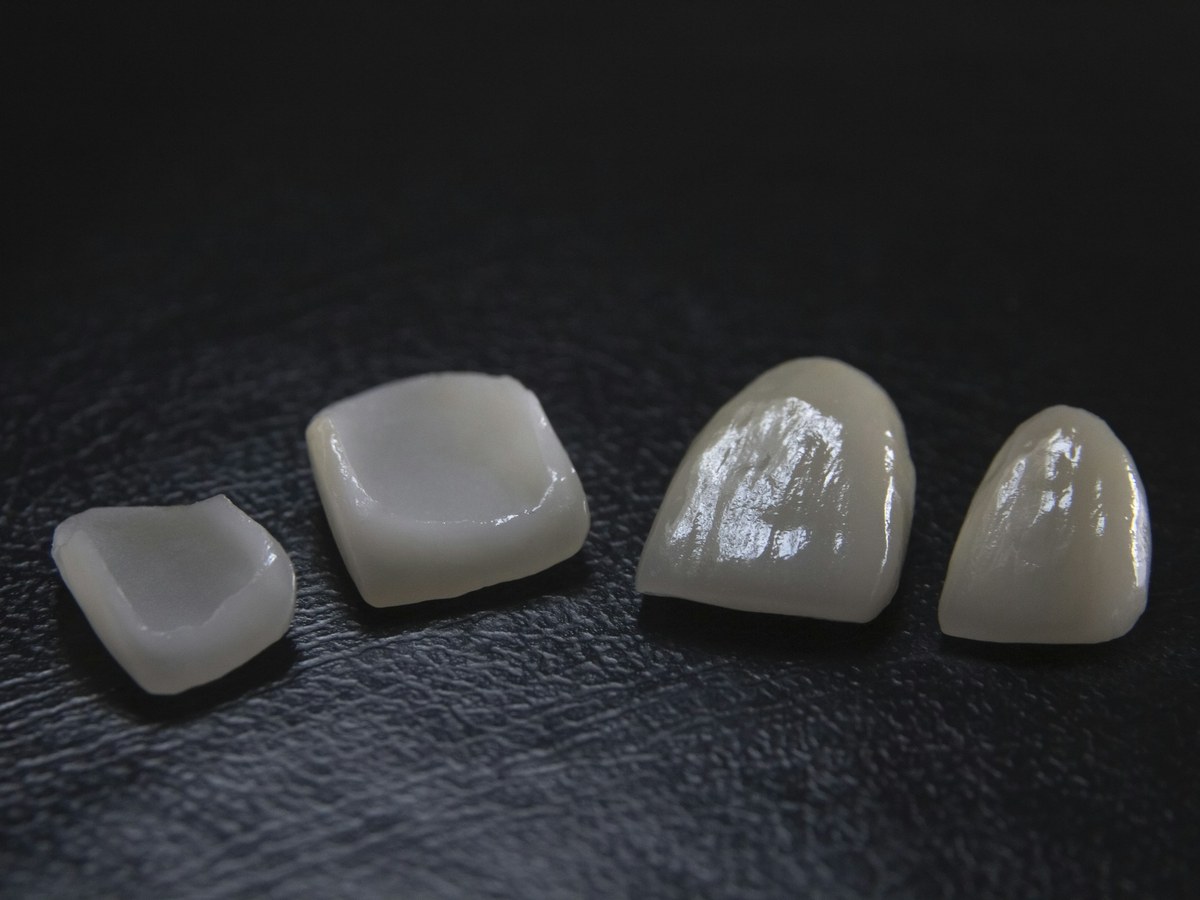
Then there is the laboratory collaboration. Veneer cases are rarely at their best when the dentist and ceramist operate like separate islands. The best results come from detailed communication: facial photos, stump shades, texture preferences, edge translucency notes, and clear discussion of what makes the patient’s smile unique. A skilled ceramist does not simply fabricate a set of white shells. They interpret anatomy and light.
That is one reason stunning veneer cases can look so different from one another while still being equally successful.
The difference between a social media smile and a real-life smile
Online galleries have changed expectations. Patients arrive with screenshots, celebrity photos, and examples saved from Instagram. There is nothing wrong with that. Reference images can be useful. But they can also flatten complexity.
A smile that is heavily edited, photographed with retraction, or filtered under ideal lighting does not tell you how those veneers look while speaking, laughing, or eating. It does not tell you how they relate to the patient’s lower lip, skin tone, or facial movement. It certainly does not tell you whether the bite is healthy.
A real-life smile has to perform, not just pose.
That includes phonetics. Veneers that are too long or incorrectly positioned can affect certain speech sounds. It includes comfort. Overbuilt contours can feel foreign to the lips. It includes hygiene. If the emergence profile is wrong, the gums may not respond well. It includes durability. A smile that looks dramatic on reveal day but chips under normal use is not art. It is poor planning.
This is why I Veneers Oxnard CA often tell patients to value videos, mock-ups, and close-up natural-light photos more than a single glamorous before-and-after image. Dentistry happens in four dimensions: shape, color, function, and time.
What often separates a good case from a great one
The biggest differences are usually subtle.
A good case may deliver straight, white teeth. A great case disappears into the face so naturally that the patient seems more like themselves, not less. The veneers do not dominate every conversation. They simply remove distractions.
Several details tend to elevate the result:
- careful edge position that flatters speech and smile arc
- line angles that control perceived width without making teeth look narrow or blocky
- surface texture that catches light like enamel rather than polished plastic
- shade selection that fits the patient’s complexion and goals
- gum harmony that frames the teeth instead of competing with them
None of those details is dramatic in isolation. Together, they determine whether a case feels believable.
One patient may need only six veneers because the visible zone is limited and the adjacent teeth match well after whitening. Another may need eight or ten to avoid a visible transition in color or shape. There is no magic number. The right number is the one that creates harmony without overtreatment.
Common design mistakes patients can learn to spot
Patients do not need a dental degree to recognize certain warning signs. If every case in a gallery looks identical, that is worth noticing. If the teeth all appear extremely opaque, square, and same-sized regardless of facial differences, that suggests a formula rather than customization.
Another concern is bulk. Veneers should not push the lips outward unnaturally or create a thick, overcontoured look near the gumline. Sometimes patients cannot identify the issue technically, but they describe it accurately by saying the veneers look “too big” or “like they sit on top of the teeth.” That perception usually has a real anatomical basis.
Uniform brightness can also be a problem. A smile can be very white and still have depth, but when every tooth has the same flat value from top to bottom, the result often looks manufactured. Likewise, edges that are too straight across can make the smile appear rigid, while over-accentuated irregularity can look contrived.
The final warning sign is disconnect between esthetics and function. If no one is discussing bite, wear patterns, clenching habits, or protective nightguards when appropriate, the conversation is incomplete.
How patient lifestyle should influence veneer design
Veneer design is not just about how someone wants to look. It is also about how they live.
A person who grinds heavily, sips coffee all day, and opens snack bags with their front teeth will place different demands on restorations than someone with gentler habits. A patient who speaks publicly for work may notice phonetic changes faster than someone who does not. Someone who values a low-maintenance routine may prefer a design that prioritizes longevity and easy hygiene over dramatic cosmetic changes.
Even personality plays a role. Some patients adapt quickly to change and enjoy a bold transformation. Others need a more gradual approach. A temporary phase or mock-up period can be invaluable for the second group. Once they see themselves, hear themselves, and live with the proposed shape for a bit, their feedback becomes far more specific and useful.
This is where a good cosmetic dentist earns trust. Not by selling the biggest treatment plan, but by knowing when to push, when to simplify, and when to say, “Let’s test this before we finalize it.”
The best Veneers Oxnard CA patients choose tend to feel personal, not generic
When people talk about loving their veneers, they rarely praise only the color. They talk about smiling in photos without overthinking. They talk about no longer hiding a chipped front tooth. They talk about their face looking more rested. They talk about the change feeling worth it because it fits their life.
That is the standard worth aiming for.
The most admired veneer cases often share a quiet quality. The teeth are improved, sometimes dramatically, but the smile still feels human. There is texture, warmth, and proportion. The patient’s age and energy are respected. The result does not erase character. It refines it.
For anyone exploring Veneers Oxnard CA options, that is the question to keep in mind during every consultation: does this plan look like a design made for me, or a design copied from somewhere else?
A custom smile should answer the face in front of it.
Questions worth asking before committing
A strong consultation goes both ways. Patients should feel comfortable asking how the smile will be designed, not just how soon it can be delivered. A few questions can reveal a great deal about the process and the mindset behind it.
- How do you decide the right length, shape, and shade for my face?
- Will I be able to preview the design with a mock-up or temporaries?
- How much natural tooth structure will need to be adjusted?
- What happens if my bite or grinding habits put the veneers at risk?
- How will you make sure the veneers do not look bulky or too opaque?
The answers should sound thoughtful and specific. Cosmetic dentistry done well is deliberate. It should never feel like ordering a standard product.
When less treatment creates a better smile
One of the most underrated forms of expertise in cosmetic dentistry is restraint. Not every esthetic concern needs veneers, and not every veneer case needs a dramatic makeover.
Sometimes whitening, enamel recontouring, or replacing old bonding solves the problem with far less intervention. Sometimes short-term orthodontic movement creates a much better foundation for conservative veneers later. Sometimes the upper front teeth are the obvious focus, but improving the lower teeth too creates the harmony the patient was actually missing.
This is another reason artistry matters. Taste is not enough. Experience is not enough. The clinician has to know how to sequence options and judge where the true visual problem lies. A patient may point to one crooked tooth, but the real issue may be wear, cant, color mismatch, or gingival asymmetry. Treat the wrong problem beautifully and the result still misses.
Why the reveal matters less than the years after
The exciting moment is when the patient sees the veneers for the first time. The meaningful test comes later.
Do they still love them after the novelty fades? Do they smile normally, eat comfortably, and feel at ease in close conversation? Do the veneers still look harmonious in family photos, office meetings, and bright afternoon light? Are the gums stable? Is the patient maintaining them well? Did the design age gracefully rather than feeling trendy or overdone?
Those are the measures that count.
A veneer case is successful when the patient stops thinking about it all the time. The smile becomes theirs. Not because it disappeared, but because it settled in so naturally that it feels like it should have always been there.
That is the art behind designing veneers patients truly love. It is not a formula. It is not a shade number. It is the disciplined, experienced act of turning preferences, anatomy, materials, and function into something that looks effortless. When that is done well, Veneers Oxnard CA patients choose can transform more than teeth. They can restore ease, confidence, and the simple pleasure of smiling without editing yourself first.
Oxnard Dentistry
1730 E Gonzales Rd, Oxnard, CA 93036, United States
+1 805-307-8731
FAQ About Veneers Oxnard CA
How long do porcelain veneers last?
Porcelain veneers can last for many years, but they can chip, loosen, or wear over time. Their lifespan depends on factors such as your bite, whether you grind your teeth, and daily care. Regular dental visits let your dentist check their condition.
Are dental veneers permanent?
Traditional veneers often require removing a small amount of enamel, so that change to the tooth is generally irreversible. Veneers can still need repair or replacement. Ask your dentist how much preparation your teeth would require.
How much do veneers cost in Oxnard?
Cost depends on the material, how many teeth you want treated, and whether you need other dental work first. Ask for a written estimate that explains the price per tooth and what is included.